OpenGL Demo Reel
Graphics Programming Project
A comprehensive demonstration of graphics programming techniques implemented with OpenGL and C++
About The Project
The OpenGL Demo Reel represents my first comprehensive exploration into graphics programming, developed as a final project for my graphics programming course. This project served as a platform to implement and demonstrate various fundamental techniques that power modern real-time rendering systems.
Built using C++ and OpenGL with an abstraction layer provided by my academic institution (ESAT), this demo showcases a range of graphics programming concepts including shader programming, lighting models, particle systems, post-processing effects, and more. The project demonstrates both the technical foundations of graphics programming and the creative possibilities they enable.
This project was particularly valuable in helping me understand the underlying systems that power game engines and other real-time graphics applications. By implementing these features from scratch, I gained deep insights into the rendering pipeline and the mathematics behind computer graphics.
Features
- Custom geometric primitives and mesh loading
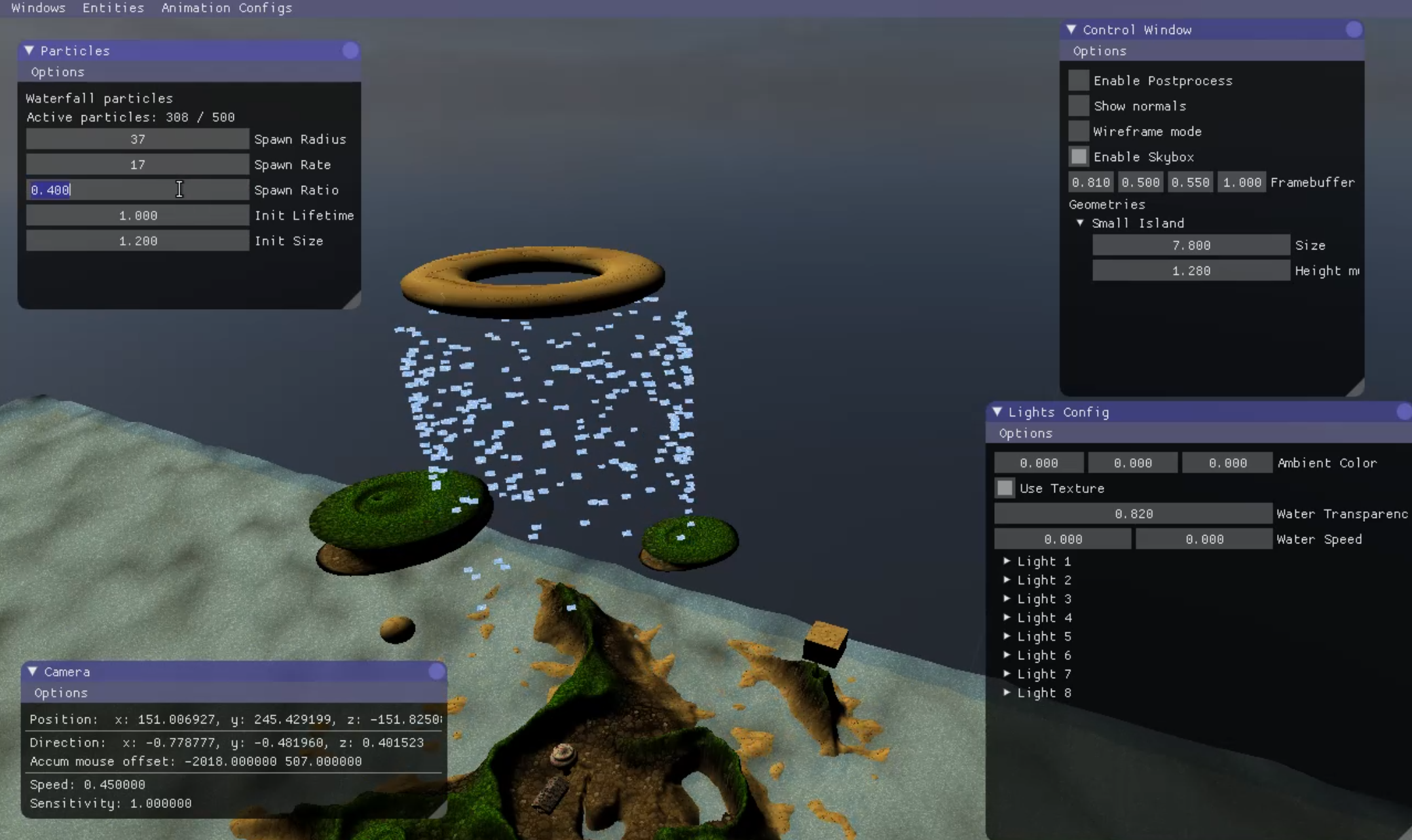
- Advanced particle system with customizable behaviors
- Skybox implementation for environment rendering
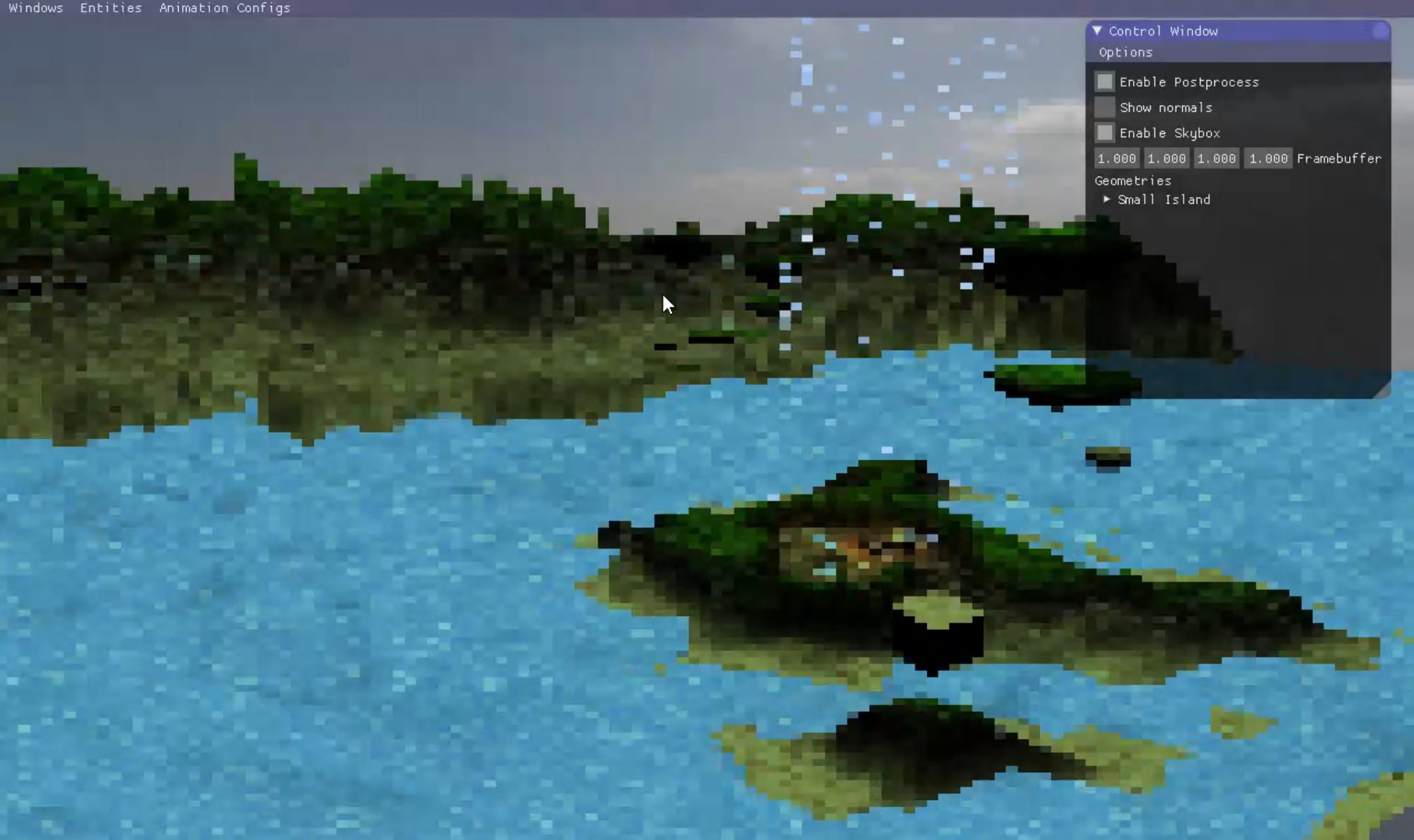
- Post-processing pipeline with multiple effects
- Free-flying camera with smooth controls
- Transparency and blending techniques
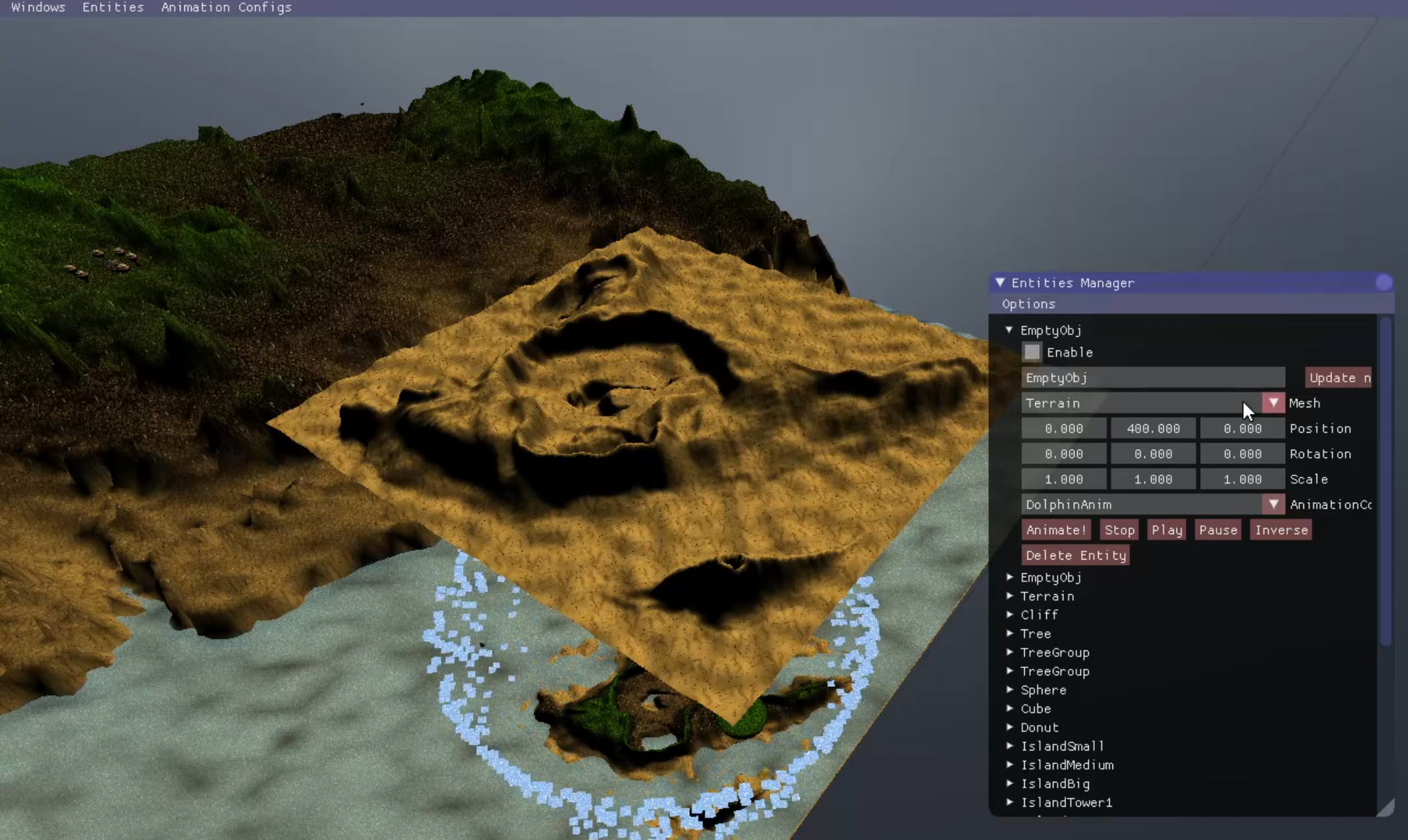
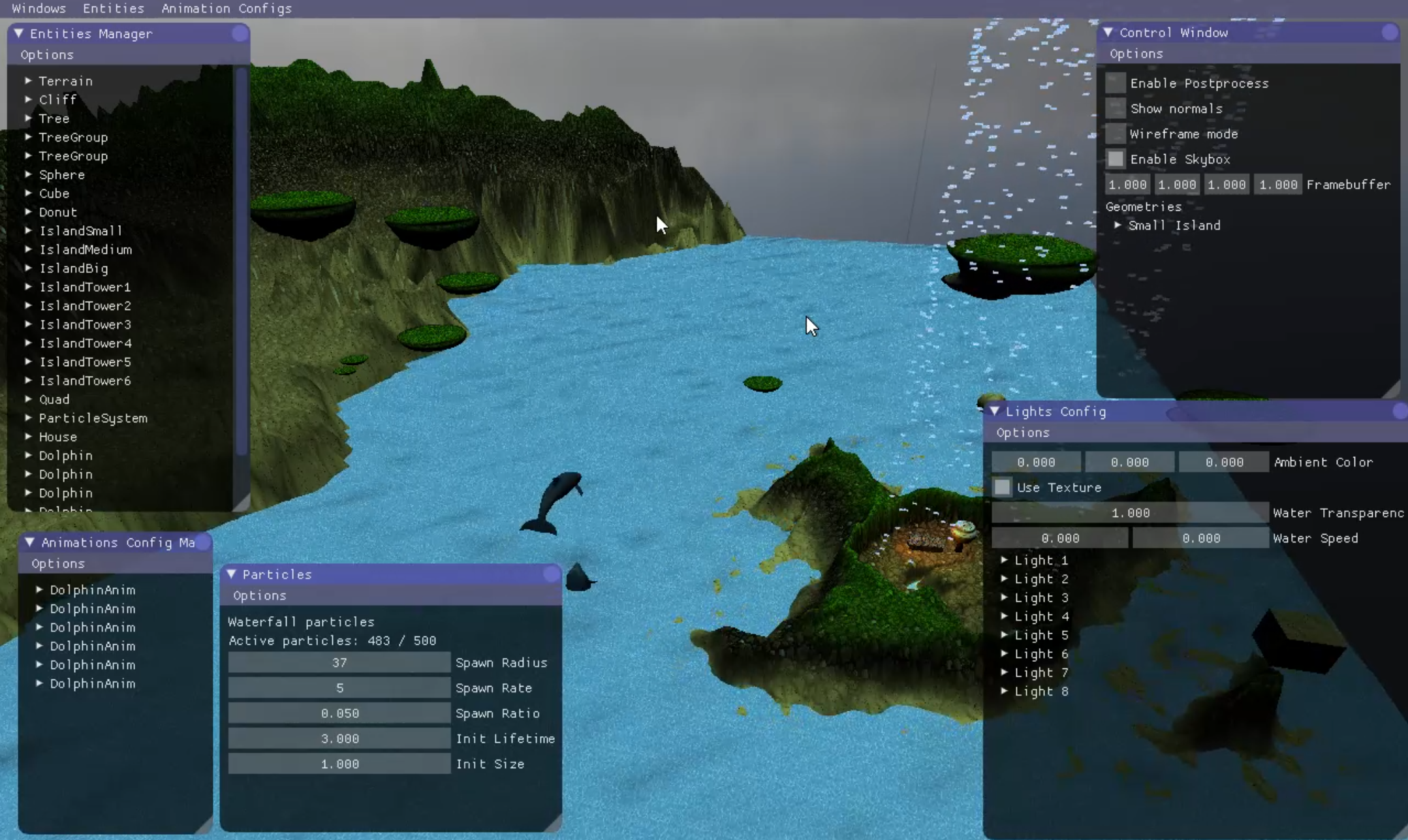
- Entity management system for scene organization
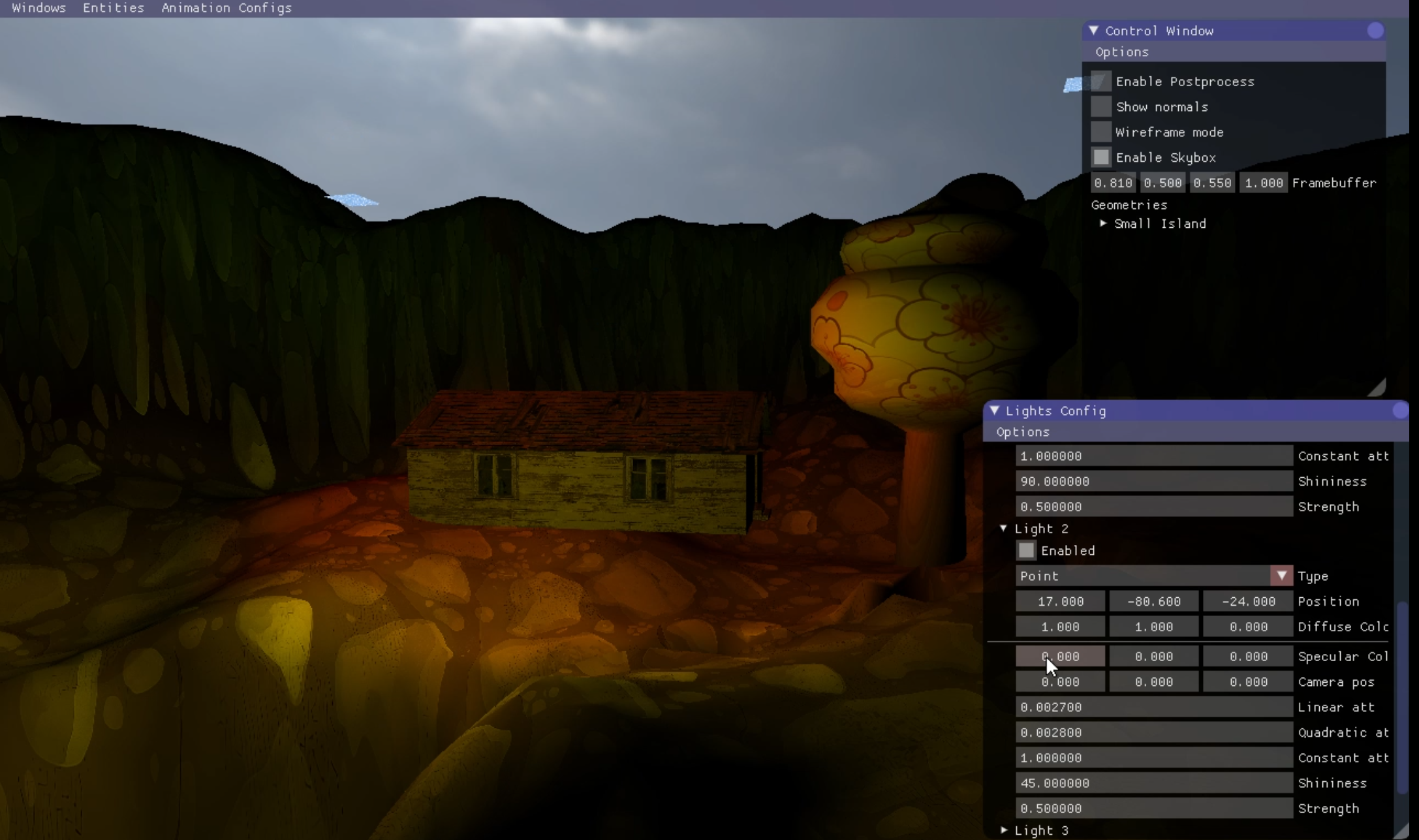
- Multiple light types (Directional, Spot, Point)
- Animation system for object transformations
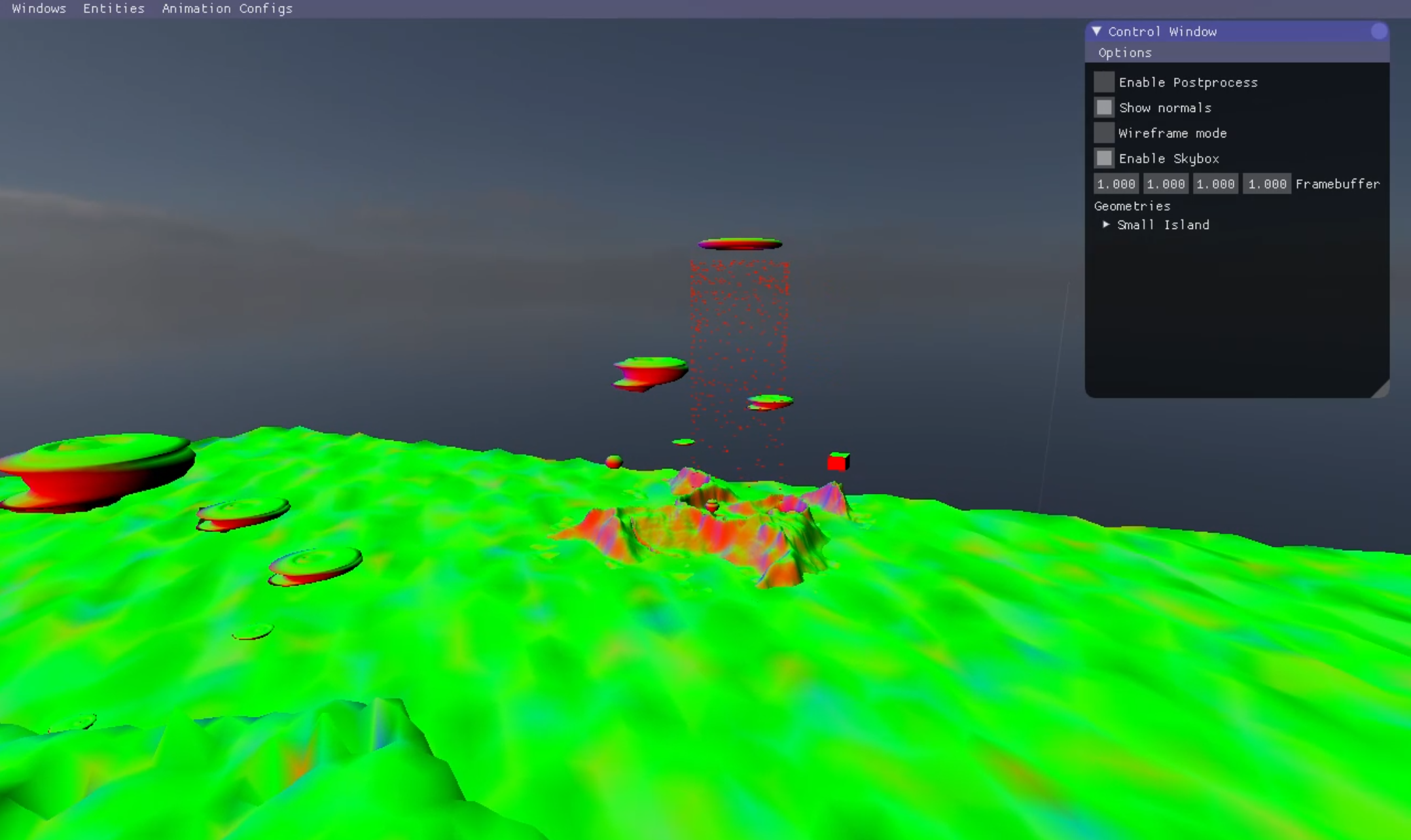
- Wireframe visualization mode for debugging
Project Information
- Category: Academic Project
- Project Date: 2024
- Languages: C++, GLSL
- Framework: OpenGL with ESAT abstraction layer
- Focus Area: Real-time rendering techniques
Technical Highlights
Shader Programming
Developed various GLSL shaders to implement lighting models, material properties, and visual effects. This included writing vertex, and fragment shaders that work together to create the final rendered output.
Lighting System
Implemented a flexible lighting system supporting directional, point, and spot lights with appropriate attenuation. The system allows for multiple light sources with different properties affecting the scene simultaneously.
Particle Systems
Created a GPU-accelerated particle system capable of simulating various effects and shapes. The system manages hundreds of particles with individual behaviors while maintaining performance through efficient GPU utilization.
Post-Processing Pipeline
Designed a flexible post-processing system that applies visual effects to the rendered scene. Effects include bloom, color grading, vignette, chromatic aberration, and more, with the ability to enable, disable, and adjust parameters in real-time.
Technologies Used
Learning Outcomes
This project was a pivotal learning experience in my development as a graphics programmer. By implementing these features from scratch, I gained a deep understanding of the graphics pipeline, shader programming, and the mathematical foundations of 3D rendering. The project allowed me to bridge theoretical knowledge with practical implementation, resulting in a comprehensive understanding of how modern game engines render their visuals.
The skills and knowledge acquired during this project continue to inform my approach to game development, allowing me to make more informed decisions about rendering techniques and performance optimizations in subsequent projects.